
Traffic Warrants in Berkshire County
Every traffic warrant here is a court warrant. It follows a citation that reached a judge after the driver stayed silent, not a police stop. Berkshire County has no standalone municipal traffic court, so the case lands in the District Court serving the town where the officer wrote the ticket. That detail decides everything. Three courts split the work across Berkshire County: Pittsfield District Court for the central towns, Northern Berkshire District Court for the north, and Southern Berkshire District Court for the south. Each clerk's office handles its own citations and defaults, so a call to the wrong courthouse just gets forwarded. Note: this stays a court record question from start to finish, and only the issuing court can recall the warrant.
The Twenty-Day Ticket Response Rule
Massachusetts gives you 20 days from issuance to pay a civil motor vehicle citation or appeal it. Miss the window and things stack up. Late and release fees can follow, the Registry of Motor Vehicles may send a default letter, and the license or right to operate can be suspended. From there, two tracks run side by side. The Registry owns the citation and the suspension; the court owns any default or warrant that grows out of the case. That split trips people up. Paying at the Registry will not recall a court warrant that has already issued. If you still owe a citation in Berkshire County, confirm the case status with the court before paying online, since the payment fixes the ticket, not the default. A Berkshire County warrant question always comes back to the clerk.
How to Check for a Berkshire County Traffic Warrant
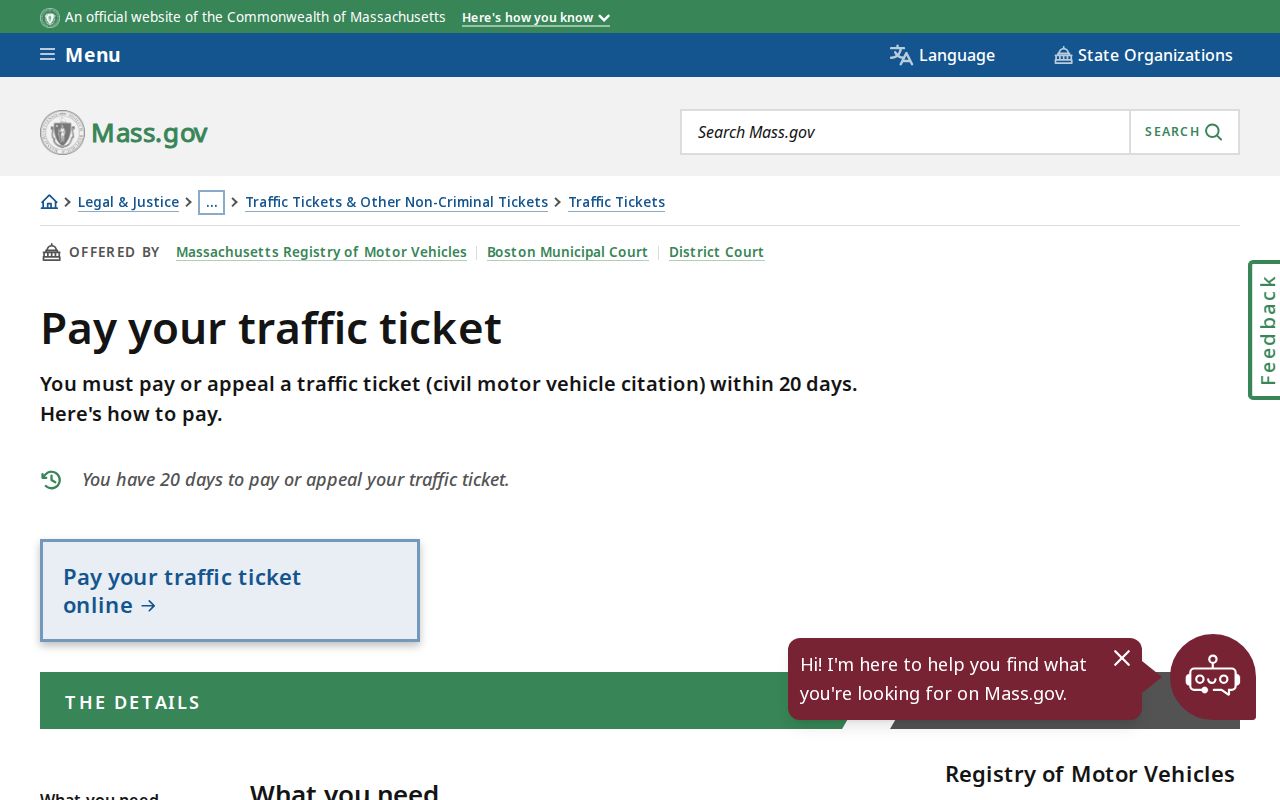
Any Berkshire County warrant check starts with the paper ticket and ends with a clerk. The citation number beats a name search, and the offense date narrows things further. The official payment route is laid out on the state traffic ticket page.
- Read the citation for the issuing town, the citation number, and the offense date.
- Search MassCourts under the Ticket or Citation Number tab with the District Court location selected.
- Read the docket for a default, a civil contempt entry, or a warrant ordered to issue.
- Call the District Court clerk and ask whether a warrant is open and what clears it.
- Ask about a recall or release notice if the Registry has suspended the license.
Note: The payment portal shows the citation, while the court docket shows the warrant, so a Berkshire County check needs both.
Citation Number and the Payment Flow
The state payment system asks for a short list of inputs, all printed on the ticket. Get the fields right in Berkshire County or the payment bounces.
- Traffic ticket or citation number
- Offense or incident date
- Email address for the confirmation
- The applicable fee, or an account if viewing outstanding citations
Paying by mail takes the citation number and the driver's license number, and cash should never go in an envelope. Registry contact center staff answer payment questions at (857) 368-8000 and (800) 858-3926, with a TTY line at (877) 768-8833. A ticket paid there resolves the citation. It does not clear a Berkshire County court default or warrant, which is why the clerk call still matters.
What a Berkshire County Traffic Warrant Shows
A traffic warrant lives inside a case file. In Berkshire County, that file carries the same structure as any other District Court matter.
| Citation Number | The number printed on the ticket, used in the Ticket or Citation Number tab. Copy it exactly as printed. |
|---|---|
| Court and Docket | The District Court division and its case number. |
| Offense Date | The date of the alleged violation. |
| Default Basis | A missed payment, a missed hearing, or both. |
| Amount Owed | The fine and fees the court recorded. |
| Status | Open default, recalled, discharged, or served. |
Berkshire County publishes no county-wide citation or warrant number format. The number on the paper ticket is the one to use.
When a Ticket Becomes Court Warrant Process
Massachusetts treats civil motor vehicle infractions under a uniform trial court rule. It maps the path from an unanswered citation to a default and, sometimes, an arrest warrant. The uniform rules on civil motor vehicle infractions spell out the sequence.
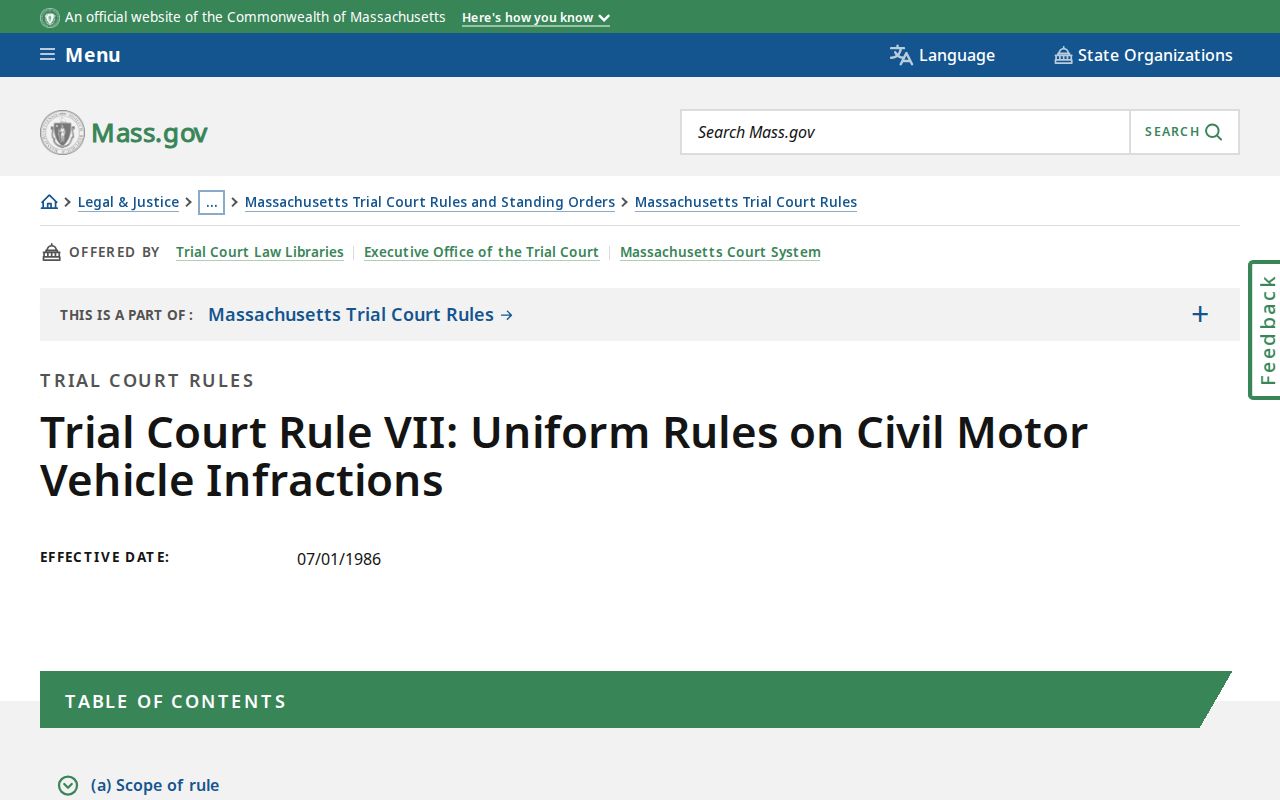
The chain runs citation, then hearing notice, then a missed hearing and a default or contempt entry, and finally an arrest warrant after a served summons goes unanswered. Each step is its own event. A driver in Berkshire County can stop the chain at any point by answering the notice.
Paying or Lifting a Berkshire County Traffic Warrant
Once a warrant has issued, the Registry is the wrong first call. The Berkshire County court holding the case decides how the default ends.
Caution: A nonpayment default warrant states the amount owed and may add a $50 assessment, which the court can waive for good cause or hardship.
Ask the clerk three things: whether the case can be discharged by payment, whether a hearing is required, and whether the court takes payment by mail, phone, or in person. Then request the recall or release notice in writing. The Registry requires a court document before it lifts a suspension that came from the warrant. The state suspension page explains which documents the Registry needs and why an online payment alone will not do for a Berkshire County driver.
Pittsfield, Northern, and Southern Traffic Routing
The town where the ticket was written picks the clerk's office. Each Berkshire County District Court keeps its own citations and defaults.
| Court | Area | Clerk's Office |
|---|---|---|
| Pittsfield District Court | Pittsfield, Dalton, Lenox, Becket-area towns | (413) 499-0558 |
| Northern Berkshire District Court | North Adams, Adams, Williamstown-area towns | (413) 663-5339 |
| Southern Berkshire District Court | Great Barrington and south county towns | (413) 528-3520 |
Berkshire County publishes no traffic warrant portal of its own. The District Court clerk and MassCourts are the two channels that matter.
Traffic Warrant vs FTA and License Holds
Three related events get confused with each other, and each has a different owner.
| Event | Who controls it | What clears it |
|---|---|---|
| Citation default | The Registry | Payment of the fine and fees |
| Court default or warrant | The District Court | A recall, a discharge, or a hearing |
| License suspension | The Registry | A court recall or release notice |
A missed appearance in a criminal case can layer an arrest warrant on top of a citation default. That is why some Berkshire County drivers face two separate suspensions at once.
A Cleared Warrant Does Not Resolve the Citation
Clearing the warrant only puts the case back on the docket. The citation itself is still open, and a license suspension tied to something other than the warrant stays in place. That is the part that surprises people. So ask the Berkshire County clerk what is left after the recall. It might be an unpaid balance, a hearing date, or a separate finding carrying its own consequence. Keep your receipt and the recall notice together, and check the docket again a few days later to confirm the entry took. For help with a city ticket that has already reached court, the Berkshire County municipal warrant page explains how city matters route into the District Court system.